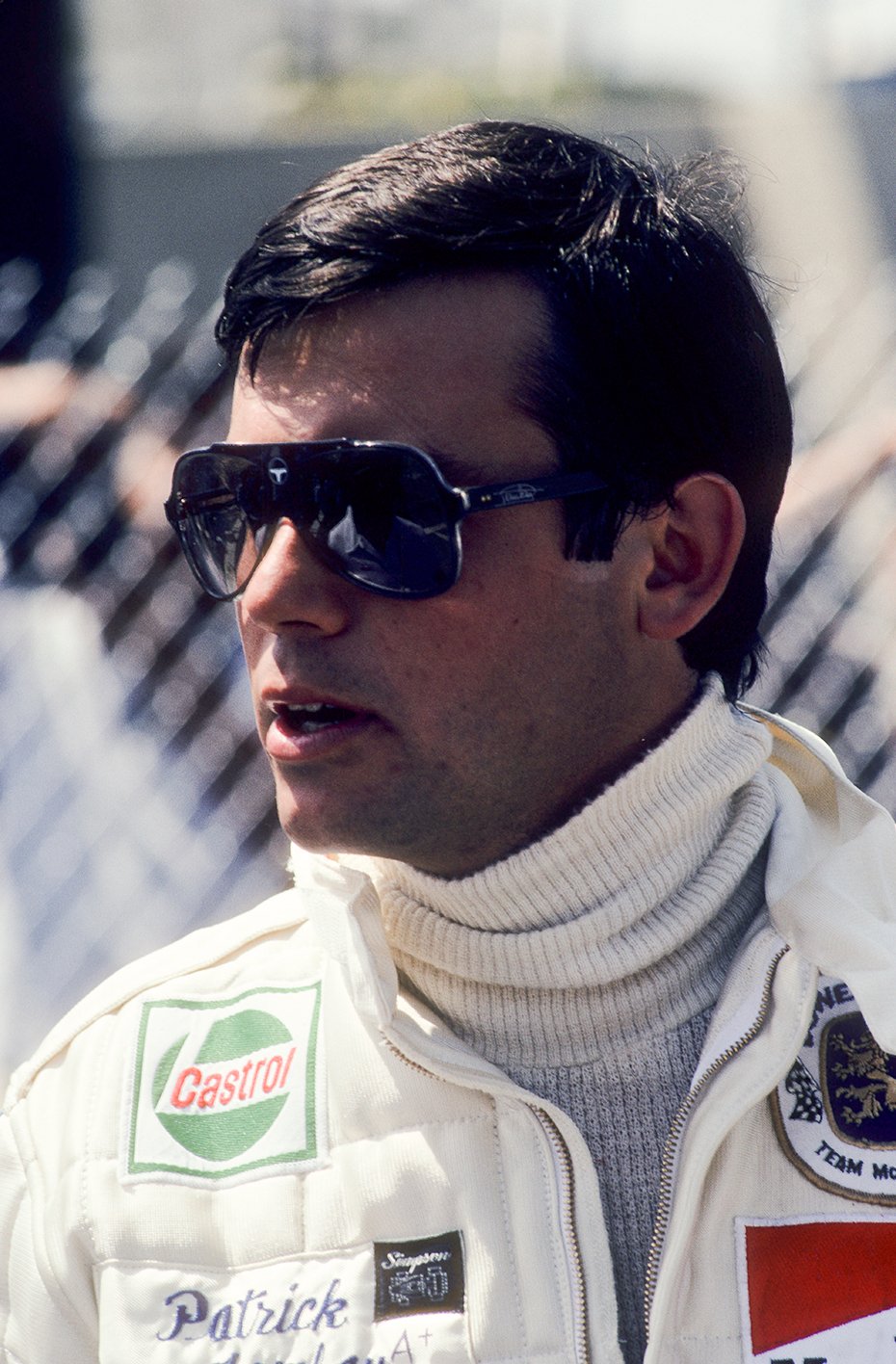
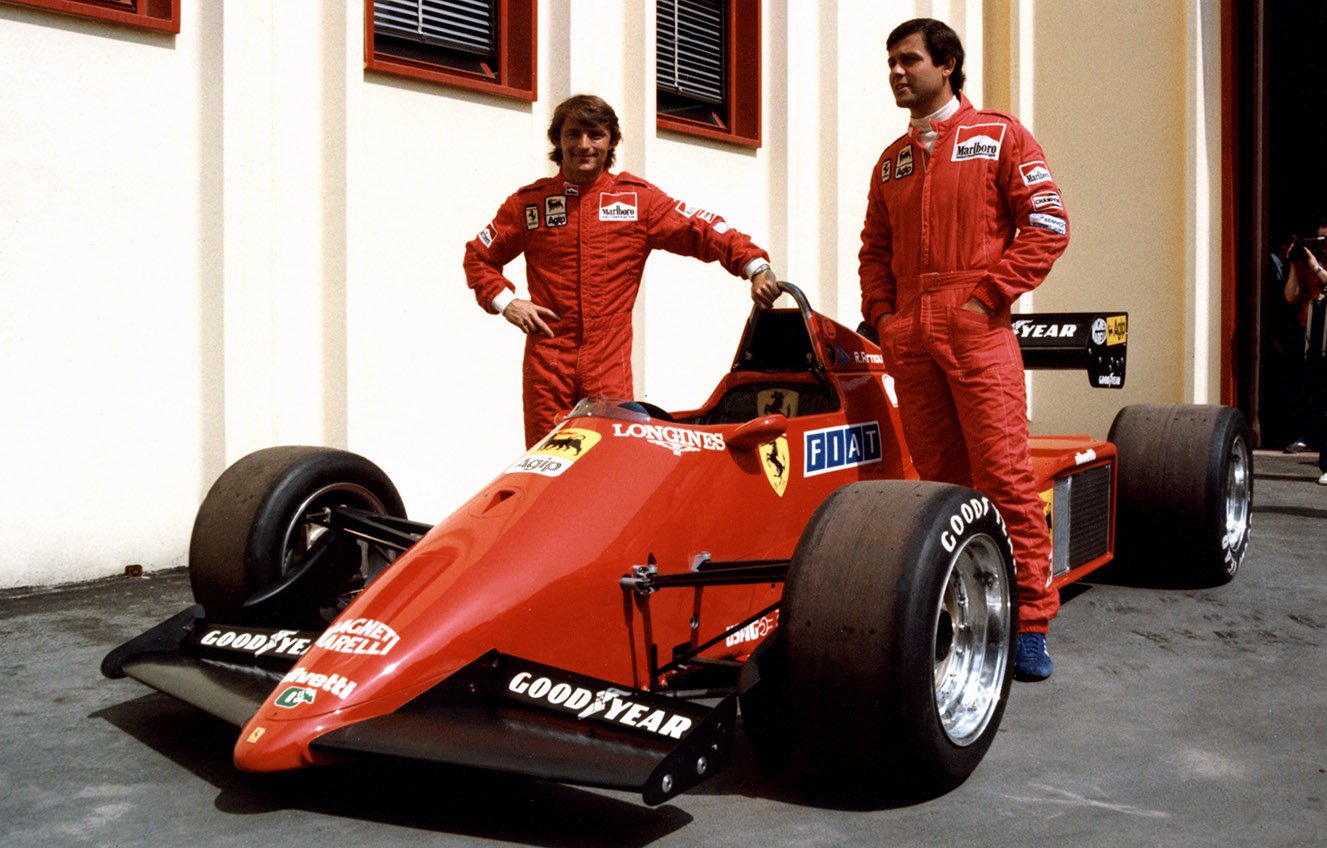
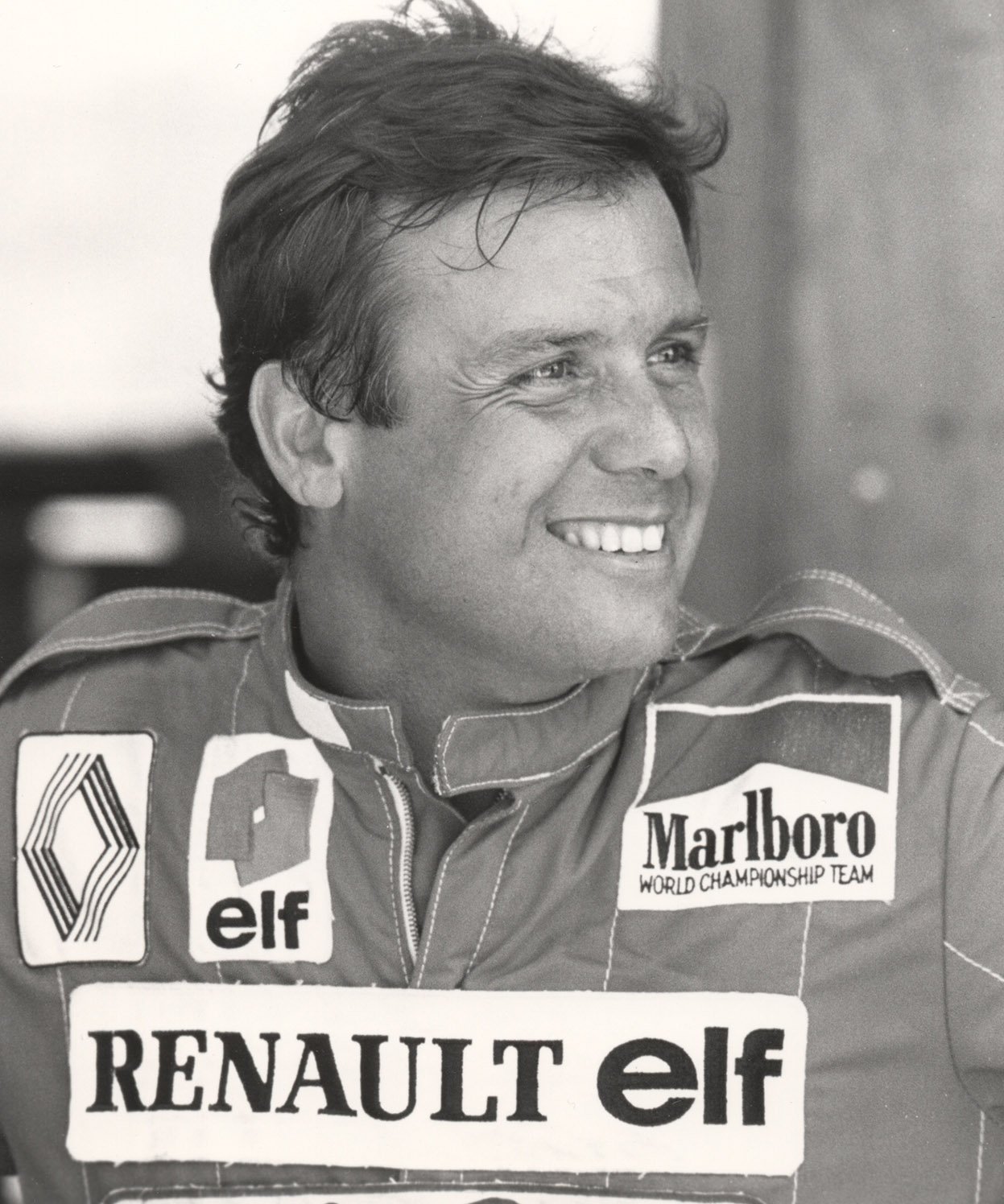
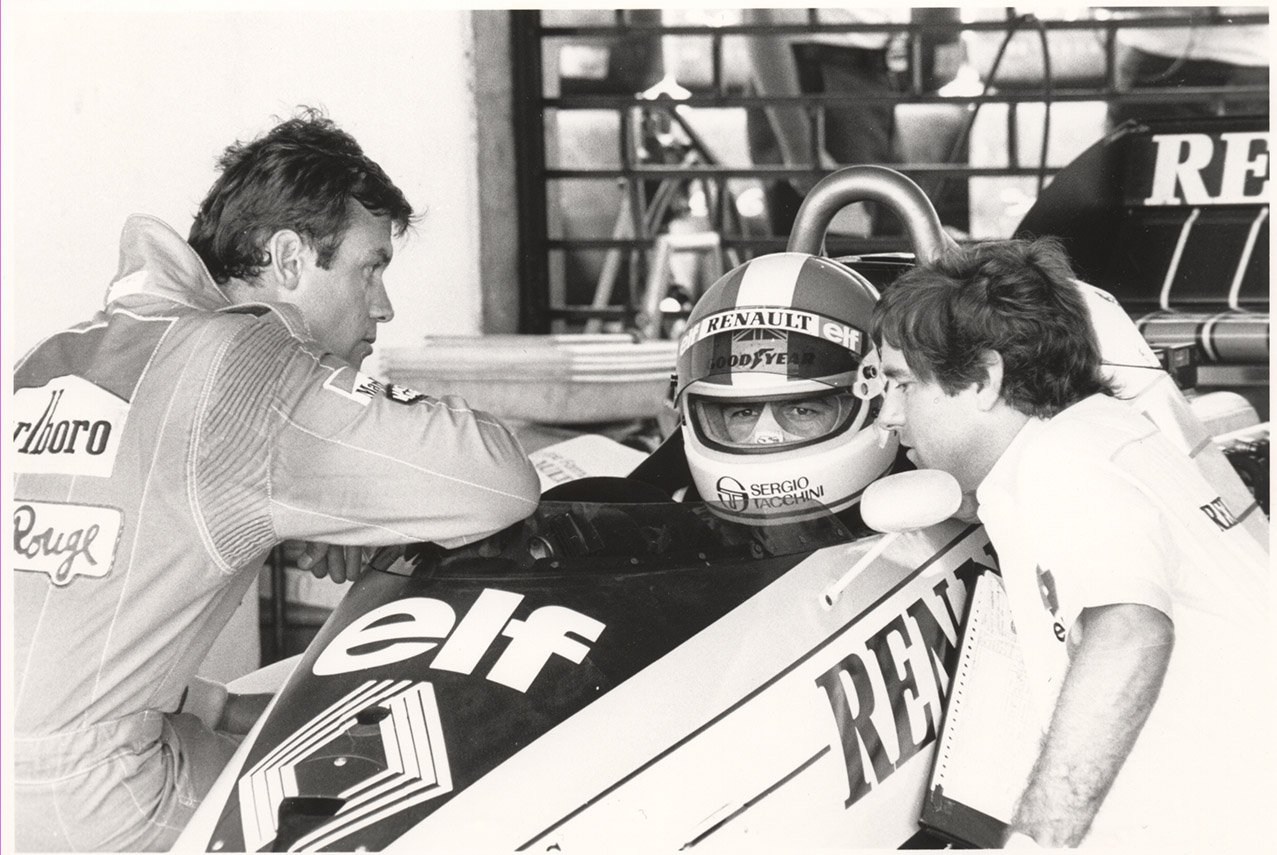
Ferrari presented Patrick Tambay to succeed to Gilles Villeneuve in the #27 Ferrari in the Dutch Grand Prix in Zandvoort. Photo Ferrari
On December 4th, Patrick Tambay passed away aged 73. The French former Ferrari, McLaren and Renault F1 racer had been battling with Parkinson for years.
Patrick Tambay has been all too easily portrayed as ‘too soft for racing’. That is only because his kind manners and gentleman-like behaviour overshadow his performance. In the mid-eighties, Tambay had become one of Formula 1 superstars, almost against his own wishes, as it would appear. Tambay’s only downside, standing in the way of more than his two Formula One Grand Prix wins, was luck. Patrick Tambay often found himself in the right team, but at the wrong time.
He did not even want to be a racing driver at first. No, the Cannes based Frenchman wanted to be a part of the French national skiing team, even becoming French downhill champion in 1968. Only, in 1971, Tambay was a spectactor at the Monaco Grand Prix, and decided to try his own hand at the car game. That same year, he would become the first winner of the Volant Elf, which would later go on to become the Pilote Elf competition at Paul Ricard. The winner received a drive in the Formula Renault series the following year. In 1973, Tambay and René Arnoux are the main players in the title fight, Tambay having to settle for second despite six victories. Elf sees in him the successor to the beloved François Cevert and moves Tambay up to Formula 2.
Patrick Tambay comes seventh in his first European F2 season in 1974, and improves to third in 1975 and 1976. For 1977, Tambay moves to the United States. He fills in for Brian Redman – a role he will play at varying stages in his career – in Carl Haas’ Lola in the new Can-Am series. The Frenchman hits the ground running, winning six races and taking the championship in his debut year.
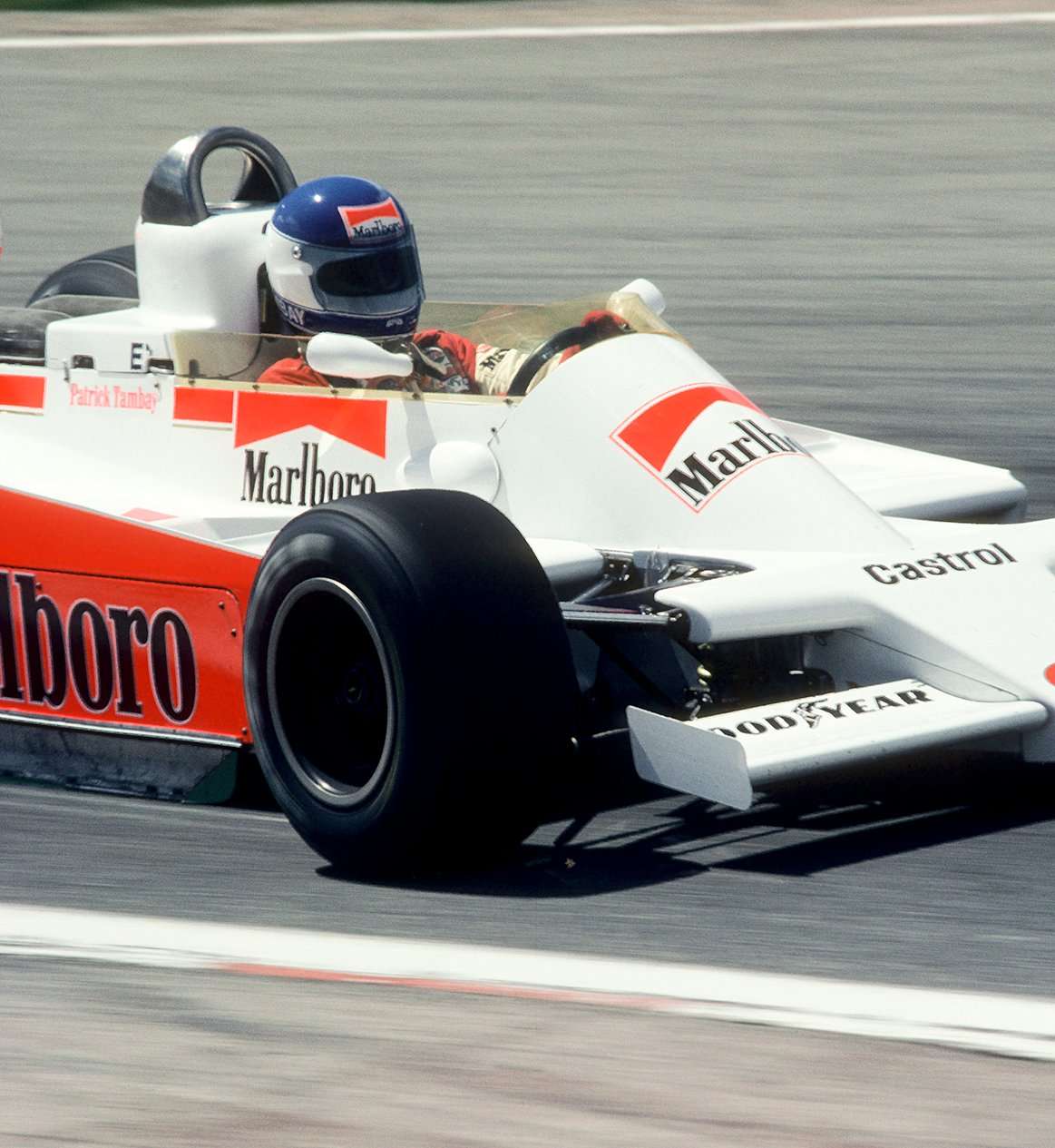
His good results lead to a first Formula 1 drive, in 1977 with Surtees, who asks Tambay to replace Larry Perkins in the midst of practice for the Swiss Grand Prix held at Dijon, France. Tambay does not qualify. He is back in F1 at the British Grand Prix in Silverstone, in an Ensign for the Theodore Racing team. In his second race at Hockenheim, he finishes in the points, and more points follow. Tambay’s talent is obvious and McLaren and Ferrari vie for his services. He makes the wrong call and picks McLaren for 1978. Tambay manages to score points with the M23 and is just as quick as his team mate James Hunt. Fourth in Anderstorp, Sweden is the highlight of his season. And 1979 is worse. No points, even a DNQ.
With McLaren manager Teddy Mayer quick to lay blame with the drivers, Tambay is without a drive for 1980. Carl Haas is quick to convince him to come back to the States, and in 1981 Tambay repays him with another title.
At the beginning of 1982, Tambay is once more called to F1 to replace Eddie Cheever at Arrows. After the turmoil at the South African Grand Prix, where the F1 drivers hide in a hotel and go on strike to protest the FIA’s superlicence plans for F1 drivers. Tambay is disgusted by the politics and calls quits on his F1 career, even if he would later admit that the underperforming Arrows helped him make the decision.
When his friend Gilles Villeneuve perishes in the Belgian Grand Prix at Zolder on May 8th, 1982, Tambay knows who’s calling when his phone rings. He asks for 24 hours to think it over, before accepting Ferrari’s offer to take over the #27 Ferrari. In an interview with Nigel Roebuck, Tambay describes the melancholy that reigned over Ferrari as he arrived for testing. “As I moved within tenths of the lap record at Fiorano on the third day of testing, smiles started to appear.”
The worst moment for the Scuderia was still to come. At the German Grand Prix, Didier Pironi misjudged a passing manoeuvre in the rain, hitting Alain Prost’s Renault in the spray. The resulting leg-injuries meant the end of Pironi’s career, who at the time looked firmly set on taking the championship. Enzo Ferrari called technical director Harvey Postlethwaite to his office to say: ‘Addio Mondiale’. Who stood up? Tambay. His win at the German Grand Prix in Hockenheim lifted Maranello’s spirits once more.
His finest moment would come in 1983 at the San Marino Grand Prix in Imola, one year after the controversial finish where Pironi would rob Villeneuve of the win. Tambay would start from the third position on the grid, the same where Villeneuve had started one year before. Tifosi had painted the Canadian flag on the spot, and all around the circuit, the flag flew for the #27 Ferrari. “It was not for me but for Gilles,” Tambay said. He looked like he was going to win, until Patrese in the faster Brabham BMW passed him with just five laps to go. In an unlikely turn of events, Patrese crashed. Tambay was handed the win, but ran dry halfway on his victory lap. It had been a close call.
The German GP in 1982 and the San Marino GP in 1983 would remain Tambay’s only F1 victories. Tambay was in fine form in 1984, every bit as fast as his team mate Arnoux, and looked set to play a part in the title battle. But Ferrari’s form unravelled.
With Alboreto taking his place at Ferrari, Tambay moved to that other powerhouse in Formula 1: Renault. Having fired Alain Prost for missing out on the 1983 title, Tambay once more plays the role of super-sub. Only to find Renault’s performance dwindling as politics take the better of the state-run company and F1 team. Pole in Dijon – the fifth in his career – and second place are his best results with Renault. After 1985, Renault pulls out of F1 as a team. Tambay finds refuge once more with Carl Haas, who starts his own F1 project with the Beatrice Lola team. The results are disappointing, and at Adelaide, Australia Beatrice quits, and so does Tambay.
The Frenchman is not done with racing yet. He ends up third in the Paris-Dakar rally raids in 1988 (Range Rover) and 1990 (Mitsubishi). In 1989, he ends up third in the Le Mans 24 Hours with Jaguar and he is a part of the IMSA program with the Bugatti EB110 in 1995 and 1996. We see him making a comeback in the Grand Prix Masters series in 2005 and 2006, and he plays an active role helping the career of his son Adrien with Audi in the DTM.
Over the last years, Patrick Tambay’s health deteriorated as Parkinson got hold of him. He did try to appear where he could, and with the book ’27 Patrick Tambay, the racing years’, he left us with a terrific document looking back on his career and his life.
At Le Mans Classic, the Little Big Mans race is just as popular as the…
Broad Arrow’s inaugural sale at the Zoute Grand Prix in Belgium saw some strong results.…
Finally, a comprehensive overview of – almost – 20 years of F1’s main talent-feeding series…
Goodwood Revival had it all, once again. That also meant both fine weather and atrocious…
1983 was the final year prototypes raced on the legendary Nordschleife of the Nürburgring. The…
Mid-fifties, American boy racers had a craving for European roadsters. Light and agile, they were…